
Slip Ring Selection: Ensuring Optimal System Performance
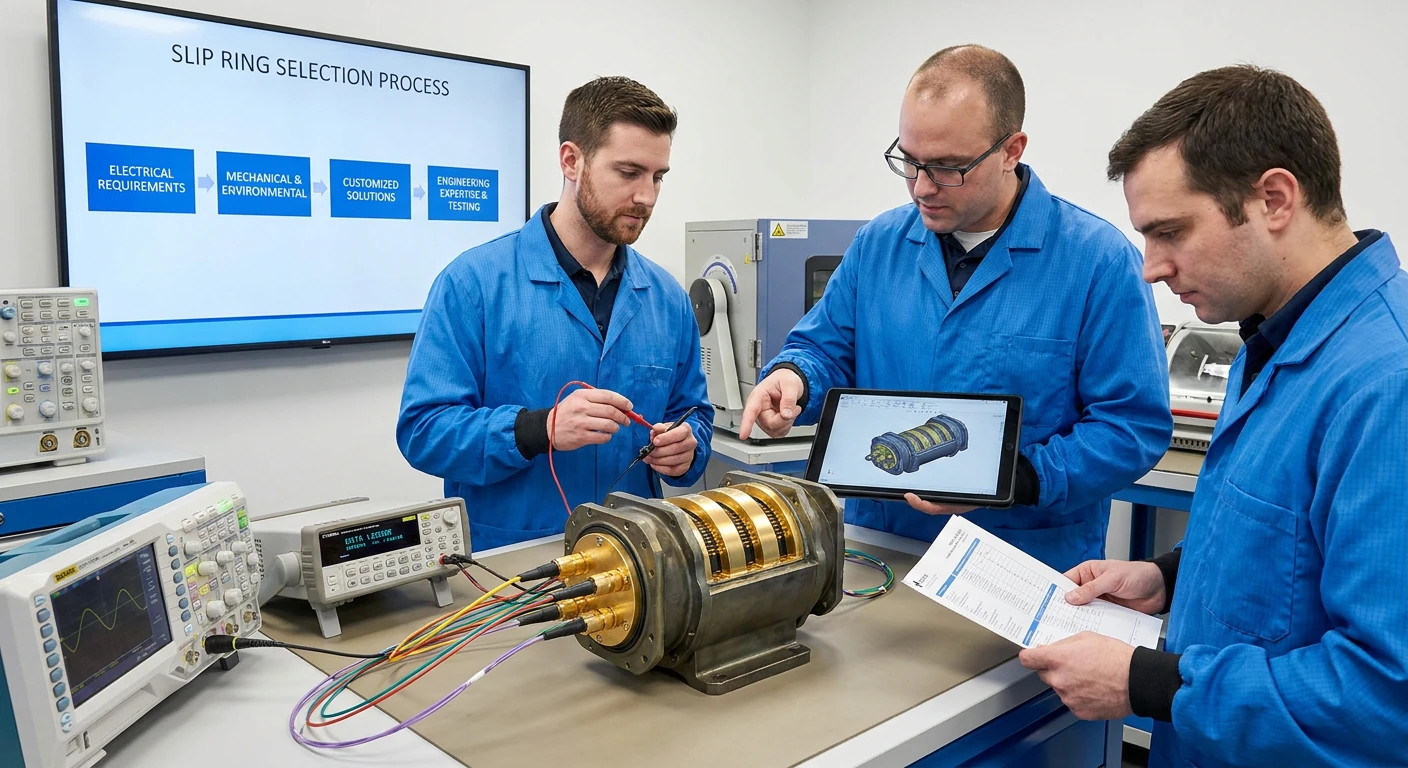
Slip Ring Selection: Ensuring Optimal System Performance
Slip ring selection is crucial for the reliability, efficiency, and performance of rotating systems. Modern applications require seamless transmission of power, signals, and data, making standard solutions. Each system has unique constraints, making a structured selection process essential for long-term functionality.
Understanding Electrical Requirements
- Define Circuits and Signals: Determine the number of circuits, current, voltage levels, and signal types (power, analog, digital, high-frequency).
- Constraints: High-speed data applications need careful impedance control, shielding, and crosstalk mitigation to prevent signal degradation.
Mechanical and Environmental Considerations
- Mechanical Aspects: Consider rotational speed, torque, space, and mounting interfaces alongside electrical design. High-speed systems need low-friction contacts to reduce wear.
- Environmental Factors: Conditions like temperature extremes, humidity, and corrosion impact material lifespan. Include protective sealing, coatings, and housing materials in the design.
Customized Solutions
- Benefits: Customized slip rings match specific application requirements in power, signal channels, mechanical design, and environment.
- Customization: May involve re-engineering architecture, material selection, and application-specific contact technologies.
Engineering Expertise and Testing
- Approach: Treat slip ring development as a system-level problem. Work with clients to translate requirements into technical specifications.
- Testing and Validation: Use simulations and empirical methods to verify performance. Conduct electrical, mechanical, and environmental testing tailored to specific applications.
Conclusion
Slip ring selection should be integrated into overall system design rather than being a simple procurement decision. Customized designs and dedicated engineering approaches enhance performance, reliability, and operational life, making slip rings essential in advanced systems.
Slip Ring Selection: Ensuring Optimal System Performance
OverviewSlip ring selection is crucial for the reliability, efficiency, and performance of rotating systems. Modern applications require seamless transmission of power, signals, and data, making standard solutions. Each system has unique constraints, making a structured selection process essential for long-term functionality.
Understanding Electrical Requirements
- Define Circuits and Signals: Determine the number of circuits, current, voltage levels, and signal types (power, analog, digital, high-frequency).
- Constraints: High-speed data applications need careful impedance control, shielding, and crosstalk mitigation to prevent signal degradation.
Mechanical and Environmental Considerations
- Mechanical Aspects: Consider rotational speed, torque, space, and mounting interfaces alongside electrical design. High-speed systems need low-friction contacts to reduce wear.
- Environmental Factors: Conditions like temperature extremes, humidity, and corrosion impact material lifespan. Include protective sealing, coatings, and housing materials in the design.
Customized Solutions
- Benefits: Customized slip rings match specific application requirements in power, signal channels, mechanical design, and environment.
- Customization: May involve re-engineering architecture, material selection, and application-specific contact technologies.
Engineering Expertise and Testing
- Approach: Treat slip ring development as a system-level problem. Work with clients to translate requirements into technical specifications.
- Testing and Validation: Use simulations and empirical methods to verify performance. Conduct electrical, mechanical, and environmental testing tailored to specific applications.
Conclusion
Slip ring selection should be integrated into overall system design rather than being a simple procurement decision. Customized designs and dedicated engineering approaches enhance performance, reliability, and operational life, making slip rings essential in advanced systems.